
Genesis Website
Designing a scalable digital experience built to evolve — the Genesis website transformation focused on making information easier to find and empowering lean content teams to manage and evolve the website independently. Through improved information architecture, a reusable design system and a more intuitive CMS, I helped create a foundation for greater consistency, autonomy and long-term adaptability.
MY ROLE
I led UX and UI design for the website transformation, spanning information architecture, research and testing, interaction design, reusable components, content models and CMS experience improvements.
The key focus was enabling content teams to create and maintain pages independently, without compromising consistency or quality.
MY CONTRIBUTION
UX strategy
Information architecture
Prototyping
UI design
Design system
User testing
Stakeholder collaboration
Developer handoff & QA
PROJECT SCOPE
Large-scale website transformation
CMS migration
Information architecture
Design system
Content publishing experience

The challenge
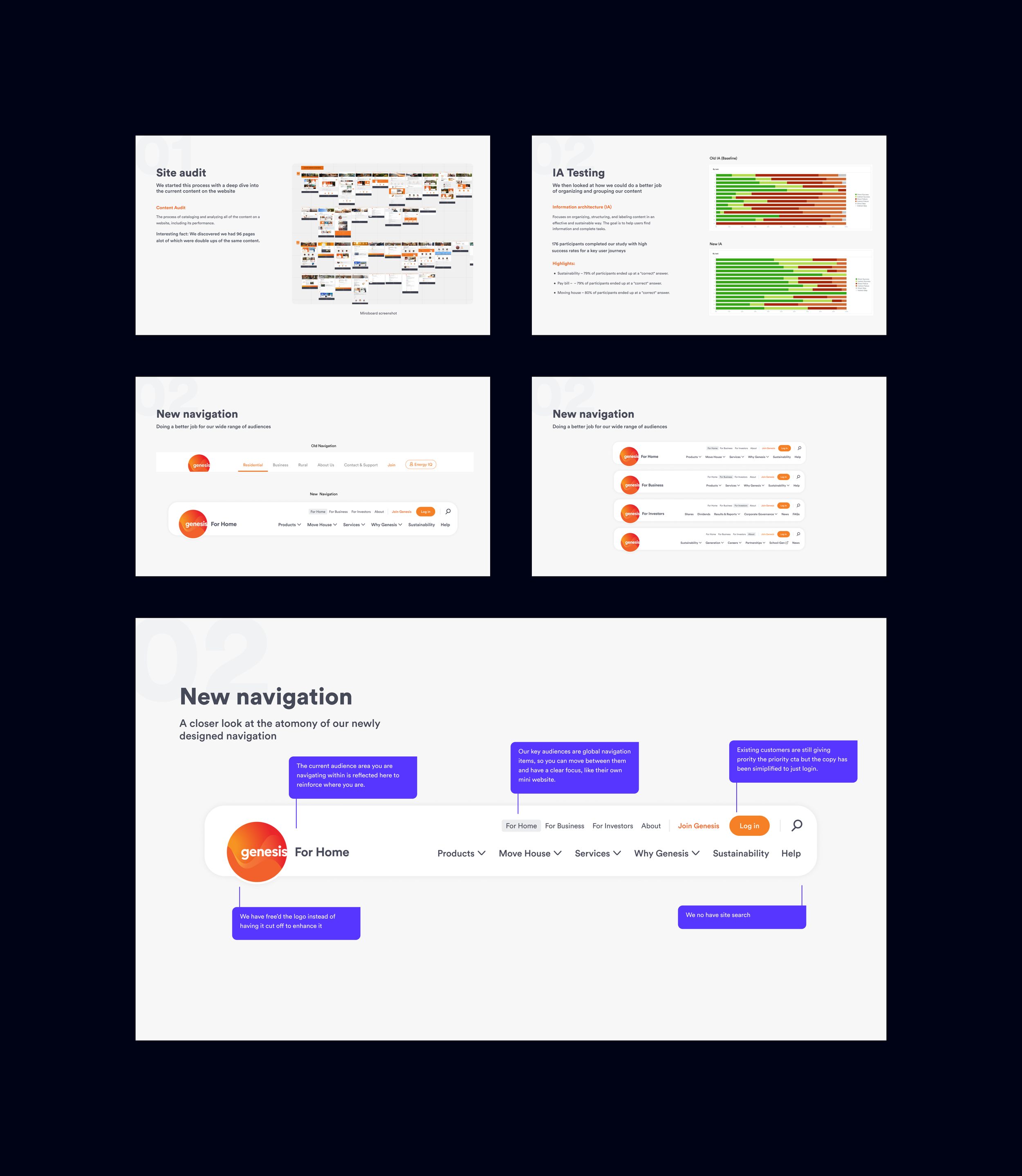
An audit identified 96 website pages, many duplicated or difficult to navigate, making it harder for customers to find the information they needed.
Internally, the Kentico CMS was clunky and restrictive, creating constant back-and-forth between content teams and design. Routine publishing tasks often required UI support, placing additional pressure on lean teams.
The challenge was to simplify the customer experience while giving content teams greater autonomy.
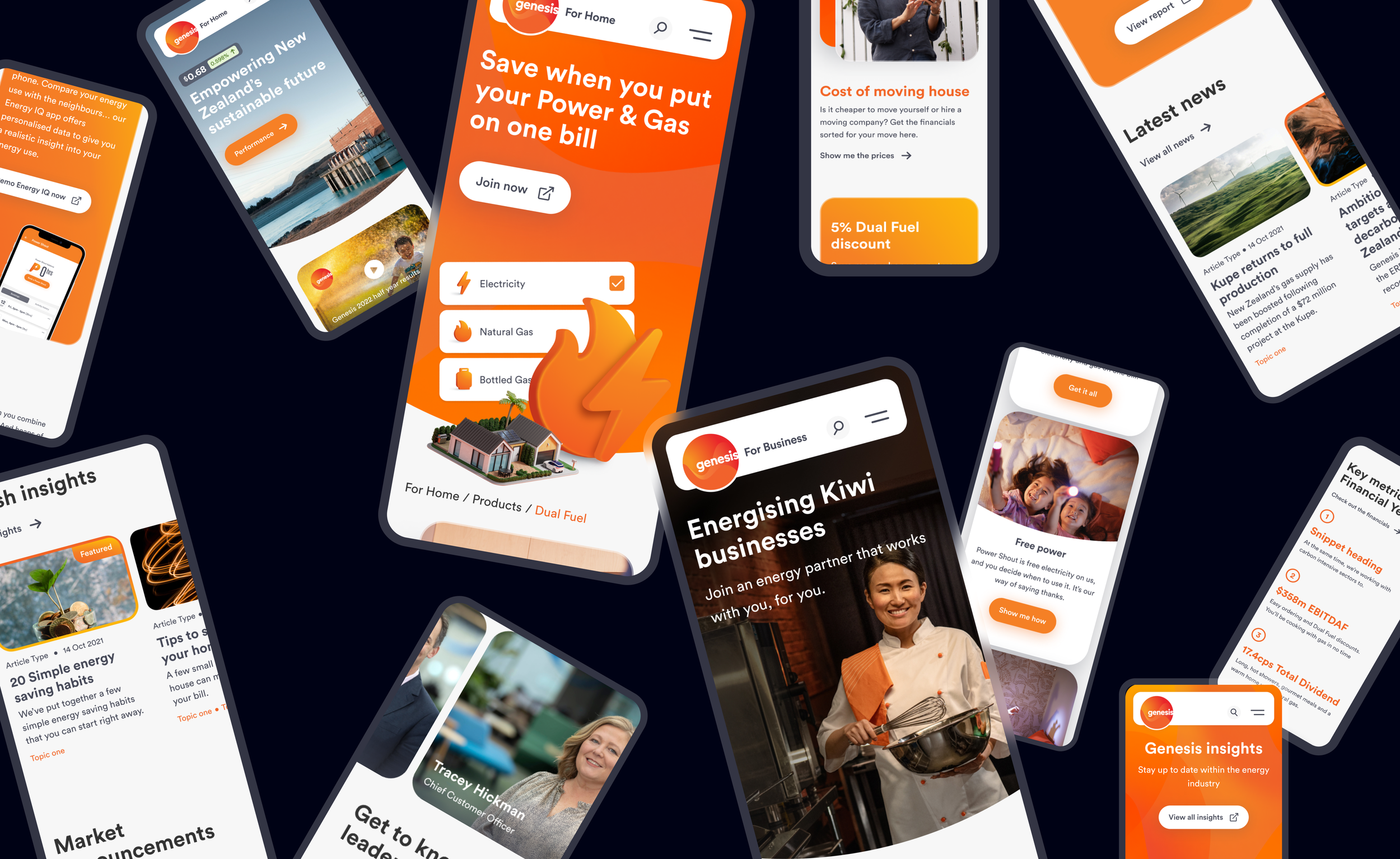
Designing for clarity and scale
I focused on improving customer journeys while creating reusable patterns and a more flexible publishing experience.
01 — Make information easier to find
I worked to simplify the information architecture, reduce duplication and create clearer pathways to key content.
I conducted information architecture testing with 176 participants to validate the proposed structure and assess how effectively customers could find information across key journeys.
Testing recorded success rates of 79% for sustainability, 79% for bill payment and 80% for moving house.
02 — Choose a more flexible CMS
The limitations of Kentico made it difficult for content teams to publish efficiently. As a collaborative, cross-functional team, we evaluated alternative platforms, with our product owner leading the process and everyone contributing their expertise.
We chose Agility CMS for its headless architecture, flexibility and adaptability. This gave us a more suitable foundation for the reusable design system and publishing experience we wanted to create, while allowing the website to evolve with changing business needs.


03 — Create a reusable design system
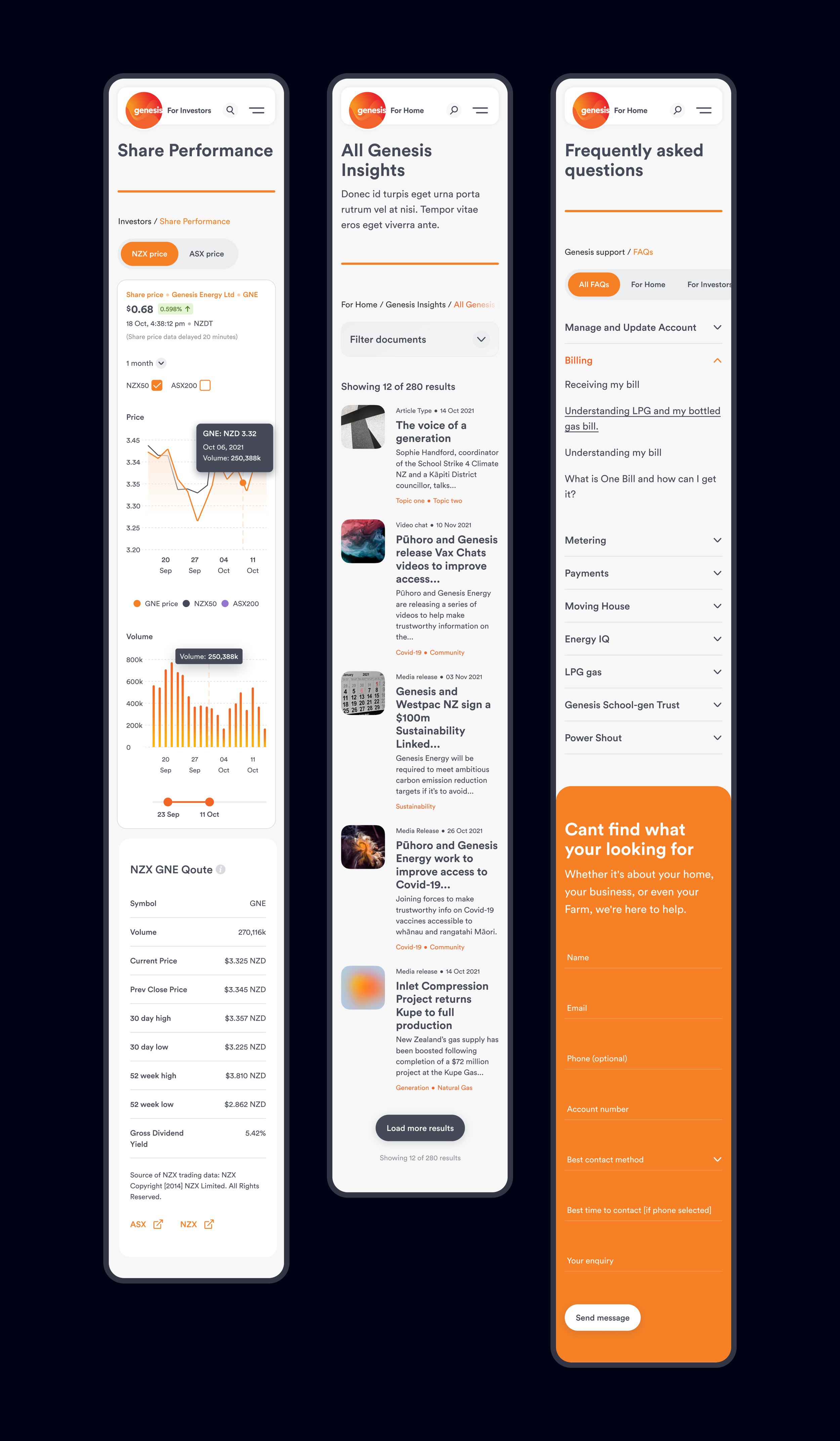
I established a flexible design system comprising approximately 20 reusable components and five page templates.
The templates supported key website experiences, including landing pages, product landing pages, news feeds, results and filtering, and content pages with nested navigation.
Rather than designing every page from scratch, teams could combine established components and patterns to create consistent experiences across the website.
Supported by Formstack integration and enhanced WYSIWYG editing capabilities, the system also made creating and maintaining content more efficient.

“It’s so much faster and easier for the content team to update. Modules are way more dynamic, and we no longer need to sink time in writing custom HTML to create specific sections.”
Rachael Loughlin, Head of Digital
04 — Empower content teams to publish independently
With lean teams, efficiency meant reducing reliance on designers for routine publishing tasks.
I developed content models in Figma to guide the structure of landing, product landing, content and news pages. I also created example template pages in the CMS, giving content teams practical starting points they could adapt to their needs.
These models were intended as guides, not rigid rules. As teams became more confident, they could duplicate successful pages, reuse established patterns and create new pages and forms independently.
Over the following five years, content teams and copywriters required little to no UI design support beyond occasional quality assurance.
Putting the design system to the test
Designing for efficiency is one thing. Seeing how well a system holds up through significant change is another.
For me, the real test came when Genesis underwent a complete brand identity change.
Because the website was built on reusable components and established patterns, its underlying structure and functionality remained intact. Only the necessary visual updates were needed for the initial brand launch.
It demonstrated the value of designing for more than day-to-day efficiency: creating a system that could adapt to major organisational change without rebuilding the experience from the ground up.

Outcomes and impact
98%
reduction in bounce rate
Alongside an increase in pages read per session following the website transformation.
~20
Reusable components
Building blocks designed to create consistent experiences across the website.
176
Information architecture testing participants
In information architecture testing to validate key customer journeys.
5
Page templates
Guiding content creation and supporting independent publishing over five years.
Long-term impact
The website transformation took nine months between 2020 and 2021, representing a significant investment of time, resources and money. When Genesis underwent a complete brand identity change in 2026, we didn't need to repeat that process from the ground up.
With the underlying structure and components already in place, the website adapted to the new identity with only the necessary visual updates.
To me, this is the real measure of efficiency: creating something that continues to deliver value long after the initial investment, avoiding the need to repeat much of that work when the business evolved.
The transformation created more than a redesigned website. It established a foundation for clearer customer journeys, independent content publishing and long-term adaptability — one that continued to deliver value years after launch.

Genesis website
Origin App

Mercury website
Genesis app
Mercury app